
Why Does My Fiberglass Pool Feel Rough? Causes and Fixes for Florida Homeowners
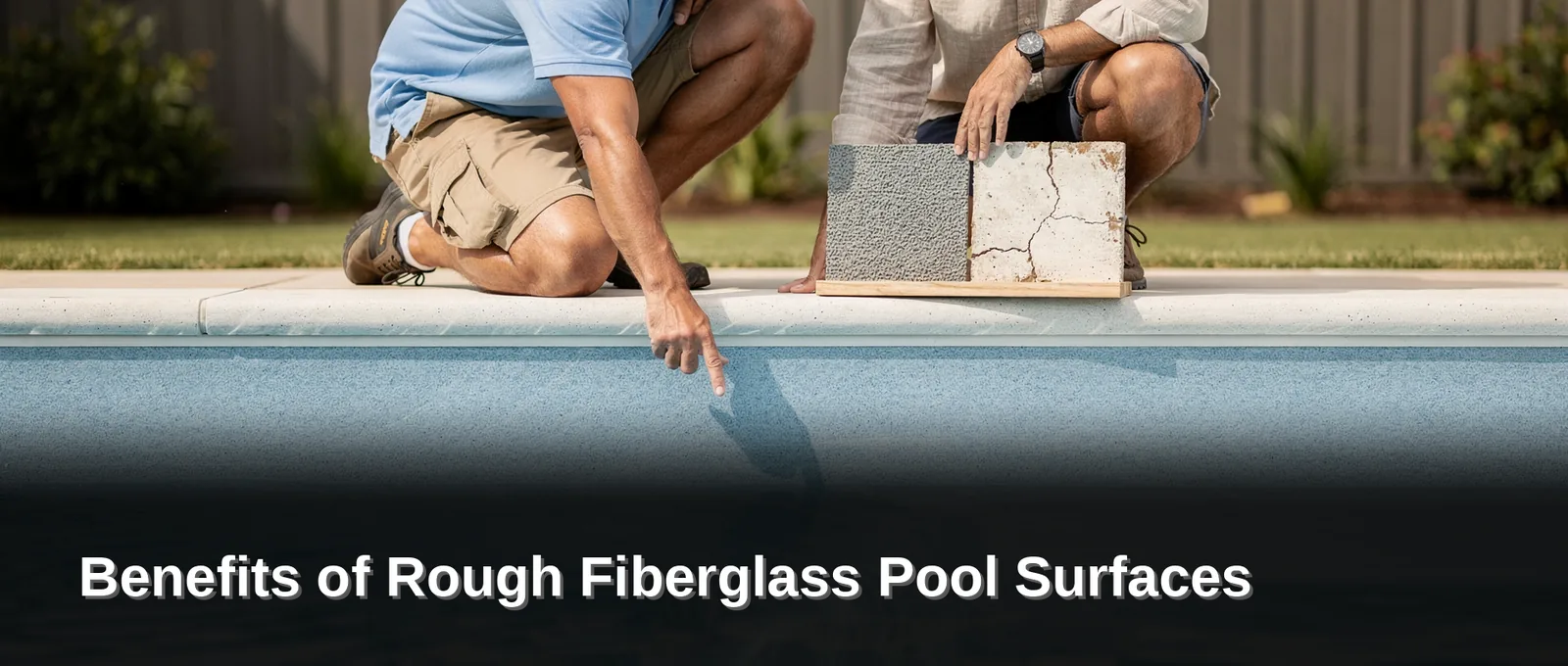
Why Does My Fiberglass Pool Feel Rough? Causes and Fixes for Florida Homeowners
If your fiberglass pool used to feel smooth and now feels rough, gritty, chalky, or your fiberglass pool feels like sandpaper, you are not imagining it. Fiberglass surfaces are built to stay smooth for years, so a change in texture usually means something has changed on or in the surface itself.
Rough texture can come from two very different sources: something sitting on top of the gel coat, such as mineral buildup or deposits, or something happening to the gel coat itself, such as oxidation, chalking, or deeper deterioration. The two can feel similar at first touch but call for very different fixes.
In some cases, a thorough cleaning and a water chemistry check resolve the roughness entirely. In other cases, the texture change signals that the protective finish has worn down, and the pool may need repair or resurfacing. This guide walks through the most common causes behind a rough fiberglass pool surface, how to tell buildup from damage, and when it makes sense to call in a professional for an inspection.
Key Takeaways
- A rough fiberglass pool surface can come from mineral or scale buildup sitting on top of the gel coat, or from wear and deterioration of the gel coat itself.
- A chalky, dull, or faded texture often points to an aging or oxidized gel coat rather than deposits that can be rinsed away.
- Unbalanced water chemistry can contribute to scaling, staining, or coating wear over time, though it is rarely the only factor involved.
- Some rough surfaces improve with cleaning or professional deposit removal, while others need localized repair or full resurfacing.
- An inspection is the most reliable way to tell whether your pool’s roughness is surface buildup or a sign of deeper damage.
Why Does a Fiberglass Pool Surface Become Rough?
A fiberglass pool surface can start to feel rough for several different reasons, and more than one factor is often involved at the same time. Common contributors include:
- Calcium or mineral scale buildup from pool water settling on the surface
- An aging or worn gel coat that has lost some of its original smoothness
- Oxidation or chalking, which leaves a dull, powdery feel
- General surface deterioration that develops with age and ongoing use
- Stains or deposits that have bonded to the finish over time
- Improper or unbalanced water chemistry maintained over a long period
- Issues from a previous coating or repair that did not fully cure or bond
- Localized areas where the protective top coat has started to wear thin
No single cause explains every rough fiberglass pool. Florida pools often show these changes sooner than pools in other climates: year-round use, strong UV exposure, heavy rain, warm water, and frequent chemical treatment all add up over time. None of that guarantees a rough surface, but it does mean Florida pools are regularly exposed to the conditions that can accelerate wear. The right next step depends on identifying which factor, or combination of factors, is actually affecting your pool.
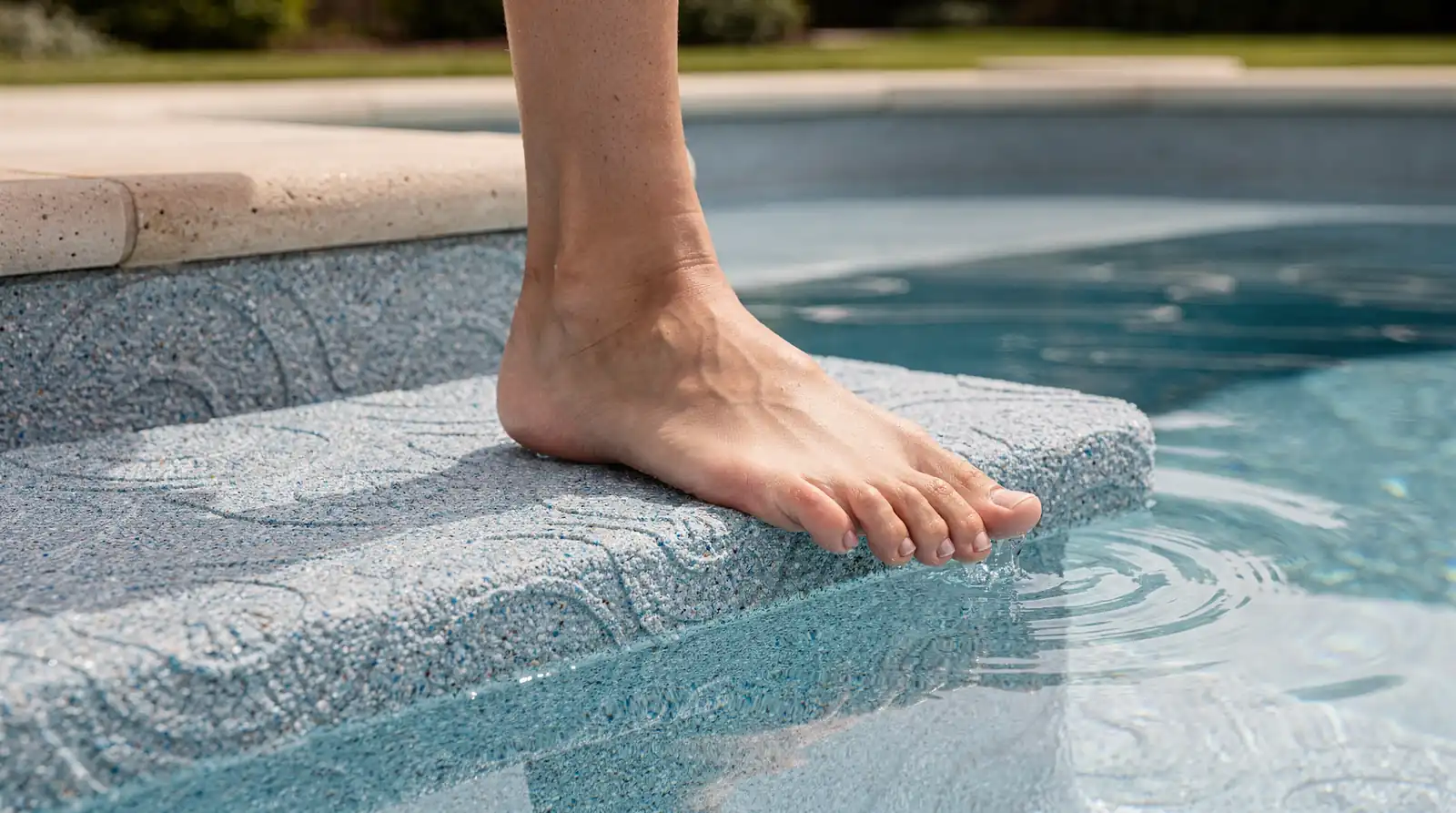
Is the Roughness Buildup or Surface Damage?
Is the Roughness Buildup or Surface Damage?
Before assuming the worst, it helps to understand what kind of rough you are dealing with. Roughness generally falls into one of two categories.
Buildup sitting on top of the surface includes mineral or scale deposits and some stains. These attach to the gel coat rather than becoming part of it, and this type of roughness often feels gritty or crusty and may be uneven across the pool.
Changes to the surface itself include a chalky or oxidized coating, a worn gel coat, or fiberglass that has started to crack, pit, blister, or delaminate. A chalky fiberglass pool surface is a change to the material itself, not something sitting on it, and this type of roughness tends to feel more uniform and does not fully disappear with cleaning.
The correct fix depends entirely on which situation you are actually facing, which is why an inspection matters more than judging by touch alone.
What Does Calcium or Scale Buildup Feel Like?
Calcium and mineral scale are among the most common reasons a pool surface feels rough. As water evaporates or chemistry drifts out of balance, dissolved minerals can come out of solution and settle onto the pool surface. Over time, this creates a hard, gritty texture that can feel almost like sandpaper, especially around the waterline, steps, and areas with reduced water circulation.
Because scale sits on top of the gel coat rather than replacing it, it can sometimes be addressed without resurfacing. Before assuming the fiberglass itself is damaged, it is worth having your water chemistry evaluated. Persistent imbalances in calcium hardness, pH, or alkalinity are often what allow scale to form in the first place.
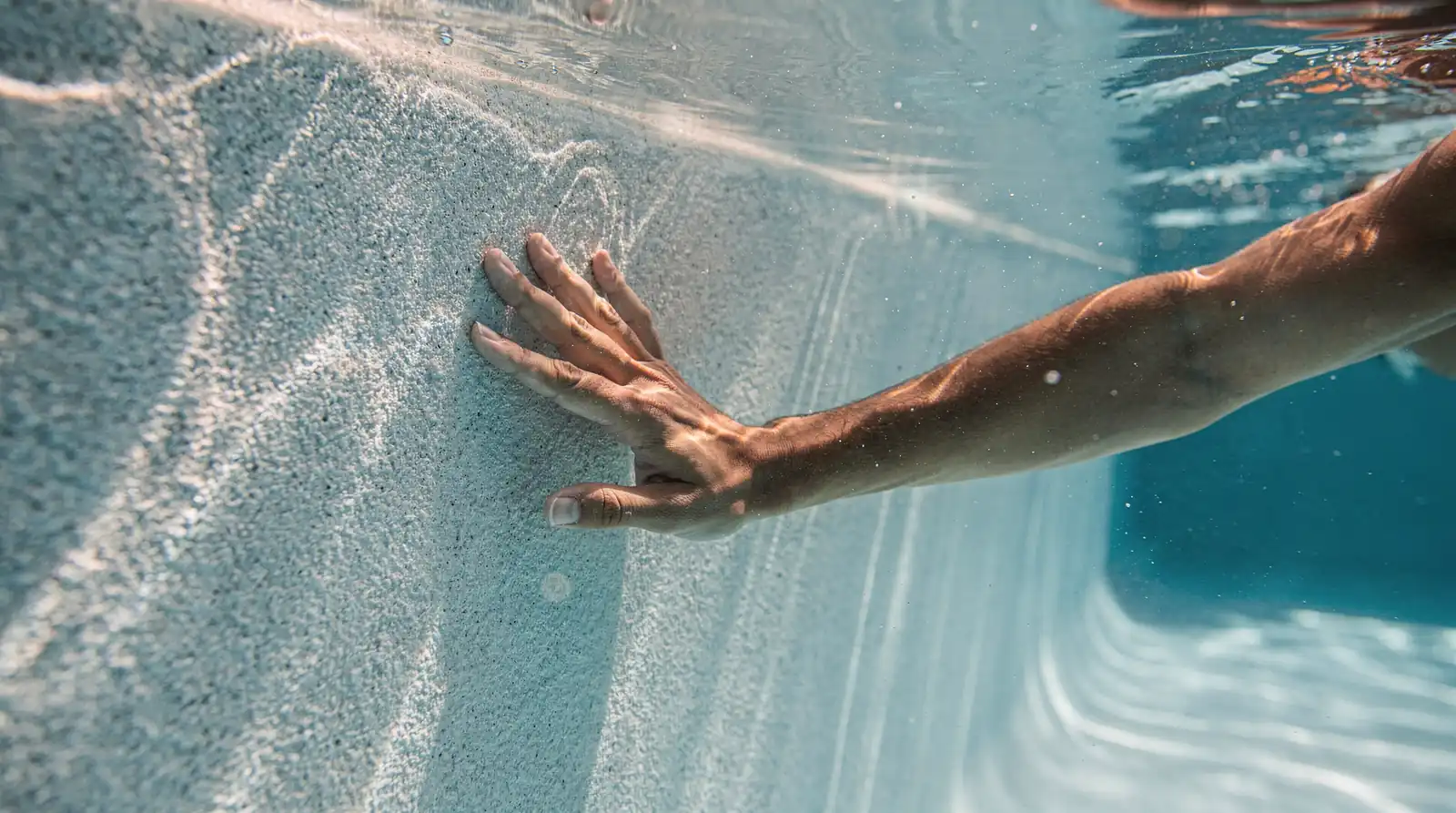
Can an Aging Gel Coat Make a Pool Feel Rough?
Can an Aging Gel Coat Make a Pool Feel Rough?
Fiberglass pools are built with a gel coat finish designed to stay smooth and glossy. Like any exterior finish, that gel coat ages over time. As it ages, it can lose its original smooth feel and begin to look chalky, faded, or dull, changes that often show up as texture before they are obvious to the eye.
This kind of aging is usually gradual. A gel coat that is older may feel slightly rougher without any cracking or structural damage. In more advanced cases, continued wear can progress toward pitting or deeper surface loss. Noticing the change early gives you more options for addressing it before it spreads.
Can Water Chemistry Damage a Fiberglass Pool Surface?
Water chemistry plays a role in how a fiberglass surface ages, though it is not something that causes damage overnight. Consistently unbalanced water, whether chronically high pH, low alkalinity, or irregular sanitizer levels, may contribute to scaling, staining, or gradual coating wear over months and years of exposure.
This does not mean normal pool chemicals used correctly will harm your fiberglass surface. Fiberglass pools are built to handle standard sanitizers and typical maintenance. The concern is long-term imbalance left uncorrected, not routine chemical use. If your water chemistry has been difficult to keep in range, it is worth reviewing alongside any surface changes you are noticing.
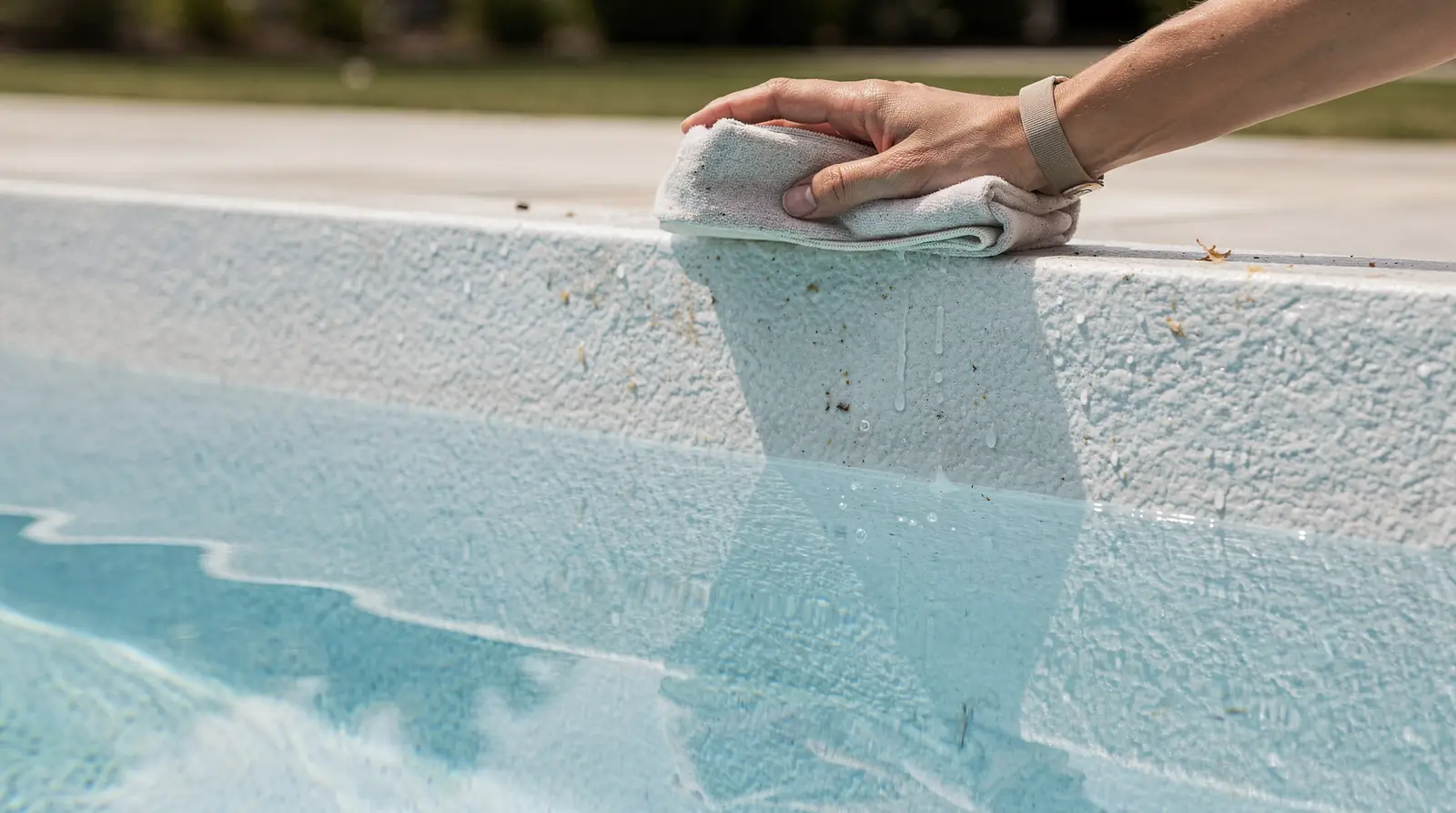
Can a Rough Fiberglass Pool Surface Be Fixed Without Resurfacing?
Can a Rough Fiberglass Pool Surface Be Fixed Without Resurfacing?
Not every rough fiberglass pool needs a full resurfacing project. The right approach depends on whether you are dealing with removable buildup or actual fiberglass pool surface damage. Possible approaches include:
- Identifying and correcting any water chemistry imbalances contributing to scale or staining
- Removing mineral or surface deposits using an appropriate professional method
- Repairing a localized area when damage is limited to a small section of the pool
- Resurfacing when the gel coat is broadly worn, chalky, or deteriorated
Because deposit removal and surface repair both require the right technique and products for fiberglass specifically, this is best handled by a professional rather than general household cleaning methods or DIY chemical treatments. For an idea of the routine care that helps keep a fiberglass surface from reaching this point, these pool resurfacing maintenance tips cover the basics for Florida pool owners.
When Does a Rough Fiberglass Pool Need Resurfacing?
Resurfacing becomes worth considering when roughness appears alongside other signs of wear, including:
- Widespread chalking or fading across large areas of the pool
- Pitting in the gel coat
- Cracking
- Blistering
- Delamination, where layers of the finish start separating
- Persistent roughness that does not improve after cleaning or deposit removal
- Large sections where the protective top coat has visibly worn away
A single localized rough spot may only need a repair. Roughness spread across much of the pool, paired with any of the signs above, usually points toward resurfacing. If you are weighing the decision, these fiberglass pool refinishing advantages outline what a new finish can offer. An in-person inspection is still the most reliable way to know which situation applies to your pool.
How Aquatic Surfaces FL Can Help
Aquatic Surfaces FL is a licensed fiberglass pool resurfacing company based in Largo, Florida, serving homeowners throughout Pinellas County and the Tampa Bay area. Our team regularly inspects pools going through exactly this kind of texture change, and we can help determine whether the roughness is coming from surface buildup, coating wear, or deeper fiberglass damage before recommending next steps. You can review examples of completed fiberglass pool resurfacing projects to see the kind of work involved.
FAQ
Why does my fiberglass pool feel rough?
A fiberglass pool usually feels rough because of mineral or scale buildup on the surface, an aging or oxidized gel coat, or, in some cases, deeper deterioration such as pitting or cracking. The exact cause varies from pool to pool.
Why does my fiberglass pool feel like sandpaper?
A sandpaper-like feel is commonly caused by calcium or mineral scale that has settled on the surface, though a chalky, oxidized gel coat can produce a similar texture. An inspection can help identify which one you are dealing with.
Can calcium buildup make a fiberglass pool rough?
Yes. Calcium and mineral scale can settle out of pool water and create a hard, gritty texture on the surface, particularly around the waterline and in areas with less circulation. This type of buildup sits on top of the gel coat rather than damaging it directly.
Can poor water chemistry damage a fiberglass pool surface?
Consistently unbalanced water chemistry, such as chronic high pH, low alkalinity, or irregular sanitizer levels, may contribute to scaling, staining, or gradual coating wear over time. Normal pool chemicals used within proper ranges are not expected to harm a fiberglass surface.
Can a rough fiberglass pool be repaired?
In many cases, yes. Roughness caused by buildup or a localized issue can often be addressed with professional cleaning, deposit removal, or targeted fiberglass pool repair. Roughness caused by widespread gel coat deterioration usually calls for resurfacing instead.
When does a rough fiberglass pool need resurfacing?
Resurfacing is worth considering when roughness is paired with widespread chalking, fading, pitting, cracking, blistering, or delamination, or when the texture does not improve after cleaning and chemistry adjustments. An inspection is the best way to confirm whether resurfacing is actually needed.
Conclusion
A rough fiberglass pool surface is rarely a mystery once you know what to look for. Sometimes it is mineral buildup that responds well to cleaning and a water chemistry adjustment. Other times it is an aging gel coat or deeper surface wear that calls for repair or resurfacing. Paying attention to how widespread the roughness is, and whether it improves with cleaning, gives you a good starting point for deciding what to do next.
If your fiberglass pool feels rough, chalky, gritty, or noticeably different than it used to, Aquatic Surfaces FL can help you find out why. We serve homeowners throughout Largo, Pinellas County, Tampa Bay, and the surrounding Florida area with pool surface inspections that identify whether buildup, coating wear, or deeper damage is behind the change. Call us at +1 (727) 755-7283 to schedule an inspection and get a clear picture of what your pool actually needs.